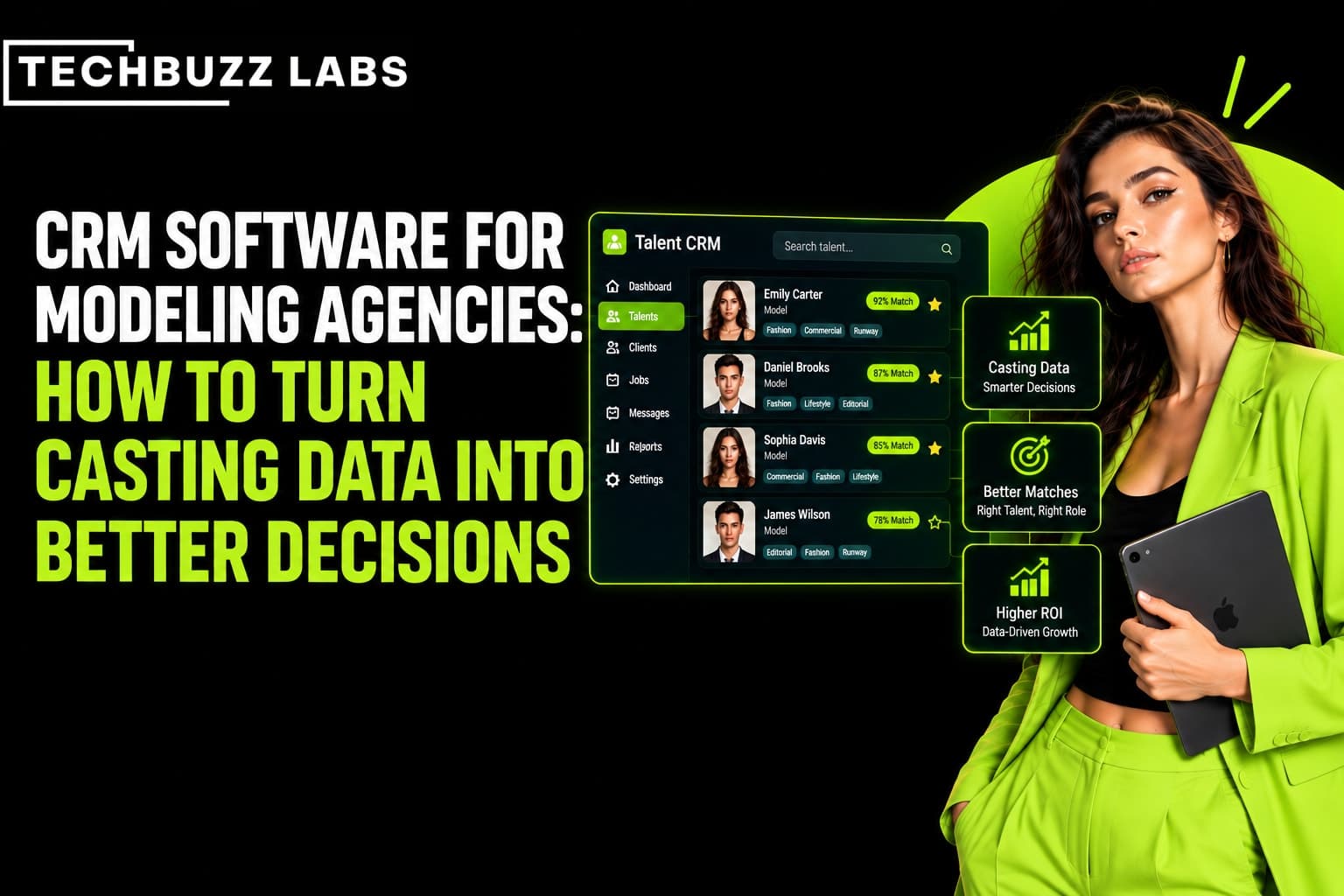
CRM Software for Modeling Agencies: How to Turn Casting Data Into Better Decisions
When this information is stored in a structured CRM, agencies can analyze these patterns instead of relying only on memory or manual records.
Modeling agencies make important decisions every day. Which model should be submitted for a casting? Which talent is available for the project? Which clients generate the most bookings? Which types of castings produce the best results? As an agency grows, answering these questions can become increasingly difficult when information is spread across spreadsheets, emails, messaging apps, and separate systems.
CRM Software for Modeling Agencies can help solve this problem by bringing talent, casting, client, submission, and booking information into one organized platform. Instead of simply storing contact information, a modern modeling CRM can help agencies turn everyday casting activity into useful insights that support better business decisions.
For agencies operating across the USA, including competitive markets such as New York, Los Angeles, Miami, Chicago, and Atlanta, organized casting data can help teams respond faster, understand performance, and manage talent more efficiently.
What Is Casting Data?
Casting data is the information an agency collects throughout the casting process. It can include client requirements, project details, casting dates, talent submissions, model availability, auditions, client feedback, booking outcomes, and previous casting history.
Each individual record may appear simple, but together these records can provide valuable information about how an agency operates.
For example, an agency may discover that certain models perform particularly well for commercial campaigns, while others receive more opportunities in editorial or fashion projects. Similarly, an agency may identify clients that consistently request particular talent profiles.
Why Casting Data Matters to Modeling Agencies
Casting decisions are often time-sensitive. A client may send a brief and expect suitable talent options within a short period. Agents need to understand the requirements, search the talent roster, check availability, prepare submissions, and follow up with the client.
When information is scattered across different tools, this process can become slower and more complicated.
CRM Software for Modeling Agencies creates a centralized environment where casting information can be connected with talent profiles and client records. This gives agents more context when deciding which talent to submit and allows managers to see how the agency's casting workflow is performing.
Understand Which Talent Performs Well
Historical casting data can help agencies understand talent performance across different opportunities.
A CRM can record which models were submitted, which received auditions, which were shortlisted, and which ultimately booked projects. Over time, this creates a valuable history for each talent profile.
Agents can use this information when evaluating future casting opportunities.
For example, if a model has consistently performed well for commercial lifestyle campaigns, that history can provide useful context when a similar casting brief arrives.
The data does not need to make the decision automatically. Instead, it gives agents additional information to consider alongside their professional judgment.
Identify Client Preferences
Different clients have different expectations, and understanding those preferences can improve future casting decisions.
A CRM can maintain information about previous client requests, submitted talent, feedback, and completed bookings. This allows agencies to build a clearer picture of what individual clients typically look for.
For example, an advertising client may frequently request commercial models with specific experience, while an editorial client may prioritize a different type of portfolio.
When agents can quickly review client history, they can create more relevant talent shortlists instead of treating every new request as an entirely new process.
Measure Submission-to-Booking Results
One of the most useful ways to analyze casting data is to track what happens after a submission.
An agency can compare the number of casting opportunities received with the number of talent submissions, auditions, shortlists, and final bookings.
This creates a clearer view of the agency's conversion process.
If an agency is making a high number of submissions but receiving relatively few bookings, management can investigate possible reasons. The issue could involve talent selection, client requirements, response times, submission quality, or another part of the workflow.
Without organized data, these patterns can be difficult to identify.
Find the Most Successful Casting Categories
Not every casting category will produce the same results for an agency.
Modeling agencies may work across commercial advertising, fashion, editorial, beauty, fitness, lifestyle, e-commerce, television, and other types of projects.
By organizing casting outcomes, agencies can identify which categories generate the strongest performance.
This information can support decisions about talent acquisition, portfolio development, client outreach, and business growth.
For example, if an agency consistently receives strong booking results from e-commerce clients, management may decide to develop its roster and marketing strategy further in that area.
Improve Talent Shortlisting
Better data can also improve the talent shortlisting process.
When CRM Software for Modeling Agencies connects casting requirements with detailed talent profiles, agents can evaluate candidates using multiple factors instead of relying on a basic name or keyword search.
Relevant information may include location, availability, experience, skills, previous work, casting history, and other agency-specific profile information.
This can make it easier to identify talent who are genuinely relevant to a client's requirements.
The result is a more structured shortlisting process while keeping experienced agents responsible for the final decision.
Combine Casting Data With Availability
A model may be a strong match for a casting but unavailable on the required dates. This makes availability an important part of the decision-making process.
A connected CRM can keep availability information alongside talent profiles and casting opportunities. Agents can then consider whether suitable talent is potentially available before preparing a submission.
This can reduce unnecessary communication and help teams focus on realistic candidates.
For busy agencies managing multiple projects across U.S. markets, connecting availability with casting information can make daily operations more efficient.
Identify Workflow Bottlenecks
Casting data can reveal problems beyond talent selection.
For example, an agency may notice that client feedback is frequently delayed, availability confirmations take too long, or certain casting requests remain open for extended periods.
A centralized CRM dashboard can make these patterns easier to see.
Once managers know where a bottleneck exists, they can determine whether the solution involves workflow changes, automation, additional team coordination, or improved data collection.
This turns CRM data into an operational improvement tool rather than simply a record-keeping system.
Improve Client Follow-Up
Client communication is another area where organized data can make a difference.
A CRM can help teams track when a casting request was received, when talent was submitted, whether feedback was received, and whether a follow-up is required.
This helps prevent important opportunities from being forgotten.
Instead of depending on individual agents to remember every pending request, the agency can maintain a centralized view of outstanding casting activities.
Faster and more organized follow-up can also create a more professional experience for clients.
Use Dashboards for Better Decisions
Large amounts of data are only useful when managers can understand them.
CRM dashboards can present important agency information in a more accessible format. Depending on the system, managers may be able to monitor active castings, submissions, auditions, bookings, client activity, talent availability, and conversion performance.
This gives agency leadership a broader operational view.
Rather than manually collecting information from multiple employees or spreadsheets, managers can review centralized information and identify trends more quickly.
How TechBuzzLabs Can Help Agencies Use Casting Data
TechBuzzLabs focuses on custom technology solutions designed around specific business workflows. For modeling and talent agencies, this approach can connect talent profiles, casting opportunities, client requests, availability, submissions, and bookings within a centralized system.
With CRM Software for Modeling Agencies, TechBuzzLabs can help agencies create a system where operational data is not isolated across different tools.
A custom CRM can also be designed around an agency's specific processes, allowing the team to manage the information that actually matters to its business. This can make casting data easier to organize, search, analyze, and use when making decisions.
Building a Data-Driven Modeling Agency
As an agency grows, its casting history becomes an increasingly valuable business resource.
Every submission, audition, client response, and booking can contribute to a better understanding of the agency's performance. When this information is consistently recorded and connected, managers can identify trends that may otherwise remain hidden.
The goal is not to replace the experience of modeling agents with numbers. Instead, data should give professionals better information to support their decisions.
A data-driven agency can use historical information to improve talent selection, understand clients, identify operational problems, and plan future growth.
Conclusion
Casting data can provide modeling agencies with valuable insights into talent performance, client preferences, booking results, and operational efficiency. However, that information becomes much more useful when it is organized and connected.
CRM Software for Modeling Agencies gives agencies a centralized foundation for managing talent and casting information while making important data easier to access and analyze.
For U.S. modeling agencies competing in fast-moving markets, using CRM data effectively can help improve shortlisting, follow-up, availability management, client relationships, and overall decision-making.
TechBuzzLabs can support this approach by building technology around the agency's specific workflow, helping connect the data generated from casting to the decisions that drive daily operations and long-term growth.
The real value of a modeling CRM is not simply storing more information. It is turning that information into insights that help agencies make smarter, faster, and more informed decisions.