CRM Software for Modeling Agencies: How AI Can Improve Talent Matching
For modeling agencies across the USA, including markets such as New York, Los Angeles, Miami, Chicago, and Atlanta, AI-assisted talent matching can help reduce repetitive searching while keeping human judgment at the center of the casting process.
Modeling agencies receive casting requests with different requirements, deadlines, locations, client preferences, and project types. Finding the right talent for every opportunity can become difficult when an agency manages hundreds or thousands of profiles. Agents may need to review portfolios, compare experience, check availability, evaluate skills, and communicate with models before creating a shortlist.
This is where CRM Software for Modeling Agencies can become more than a database or contact management system. When artificial intelligence is integrated with a modeling CRM, agencies can use existing talent data to identify potentially suitable models faster, organize casting workflows, and support agents in making better-informed decisions.
What Is AI-Powered Talent Matching?
AI-powered talent matching uses data and predefined criteria to help identify models who may be suitable for a particular casting opportunity.
For example, a client might need models for a commercial campaign in Los Angeles. The brief could include requirements related to location, experience, availability, skills, project type, portfolio characteristics, or other agency-specific criteria.
Instead of an agent manually reviewing an entire talent database, an AI-enabled CRM can analyze the available information and help surface profiles that appear relevant.
The goal is not to replace casting agents. Instead, AI can reduce the amount of repetitive searching and allow agents to spend more time reviewing recommendations, understanding client requirements, and making the final selection.
Why Talent Matching Becomes Difficult as Agencies Grow
A small modeling agency may manage its talent using spreadsheets and folders. As the roster expands, however, the amount of information becomes much harder to manage manually.
An established agency may have hundreds or thousands of talent profiles containing photographs, measurements, experience, skills, locations, availability, previous bookings, and other information.
At the same time, multiple casting requests may arrive during the same day. Each opportunity can have different requirements.
Searching through every profile manually can take considerable time. There is also a risk that suitable talent may be overlooked simply because an agent did not have enough time to review the entire database.
CRM Software for Modeling Agencies can create a structured foundation where talent information is organized and available for more intelligent searching.
Connecting AI With the Talent Database
AI matching becomes more useful when it works with structured CRM data.
A modeling CRM can contain information about talent profiles, casting opportunities, client requirements, availability, submissions, and booking history. AI can use relevant information from these records to help identify potential matches.
For example, if a casting requires commercial experience and availability in New York, the system can prioritize profiles that meet those requirements.
This creates a more connected process than simply searching a spreadsheet for a name or keyword.
Matching Talent to Specific Casting Requirements
One of the most useful applications of AI is matching talent against the details of an individual casting brief.
A client might request:
Models available for specific dates
Talent located in a particular market
Specific modeling experience
Certain skills or categories
Previous experience with similar projects
Specific portfolio characteristics
Instead of treating every requirement separately, an AI-assisted CRM can help agents evaluate multiple data points together.
The result can be a more relevant starting shortlist that agents can review before submitting talent to the client.
AI Can Help Agents Prioritize Profiles
Not every potential match has the same level of relevance.
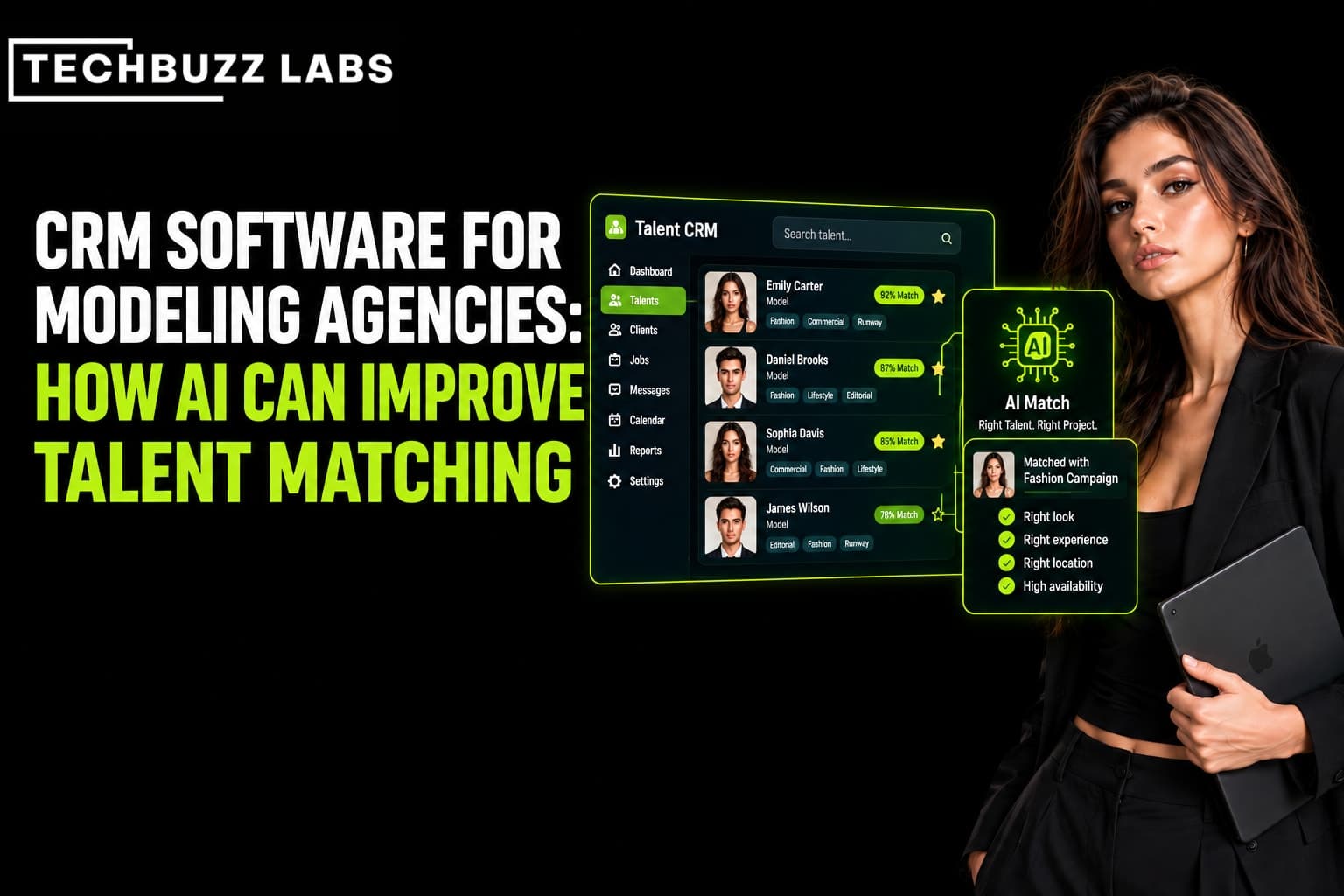
An AI-enabled CRM Software for Modeling Agencies can potentially rank or prioritize profiles based on how closely they align with the requirements of a casting opportunity.
For example, a model who matches the required location, availability, experience, and skills may receive a higher relevance score than someone who only matches one or two criteria.
This does not mean the highest-ranked profile should automatically be selected. Rather, prioritization can help agents decide where to focus their attention first.
Combining Availability With Talent Matching
A strong talent match is not useful if the model is unavailable.
This is one reason why AI matching becomes more valuable when connected to a CRM rather than operating as a standalone search tool.
The system can consider available information about a model's schedule and current commitments alongside profile data. This can help agents identify candidates who are not only relevant to a casting brief but may also be available for the required project dates.
For busy U.S. agencies handling multiple casting opportunities simultaneously, connecting talent matching with availability can make the workflow more practical.
Using Client Preferences as Additional Context
Client history can also provide useful context for talent matching.
An agency may work with clients that regularly request particular types of models, experience levels, locations, or portfolio styles. Over time, a CRM can maintain records of previous client interactions, casting requests, submissions, and bookings.
When this information is connected, agents can better understand what a client has previously requested.
AI can potentially use these patterns as an additional signal when helping agents identify relevant talent for future opportunities.
Learning From Previous Casting Decisions
Past casting activity can create valuable operational data.
An agency may know which models were shortlisted, submitted, selected, rejected, or ultimately booked for previous opportunities. This information can help agents understand patterns in their casting workflow.
When appropriate data is available, AI can help surface insights from these historical records.
For example, an agency may discover that certain talent profiles consistently perform well for particular types of campaigns or client categories.
However, historical data should support professional judgment rather than determine future casting decisions automatically.
Keeping Human Agents in Control
AI can make talent discovery faster, but modeling is a human-centered industry. Portfolio quality, personality, professionalism, client relationships, creative direction, and many other factors cannot always be reduced to database fields.
That is why the strongest approach is generally AI-assisted matching rather than fully automated selection.
The system can identify potentially relevant talent, while agents review the recommendations and make the final decision.
This human-in-the-loop approach allows agencies to benefit from automation without removing professional expertise from the casting process.
How CRM Software Can Improve the Entire Casting Workflow
AI talent matching becomes even more useful when it is part of a complete CRM workflow.
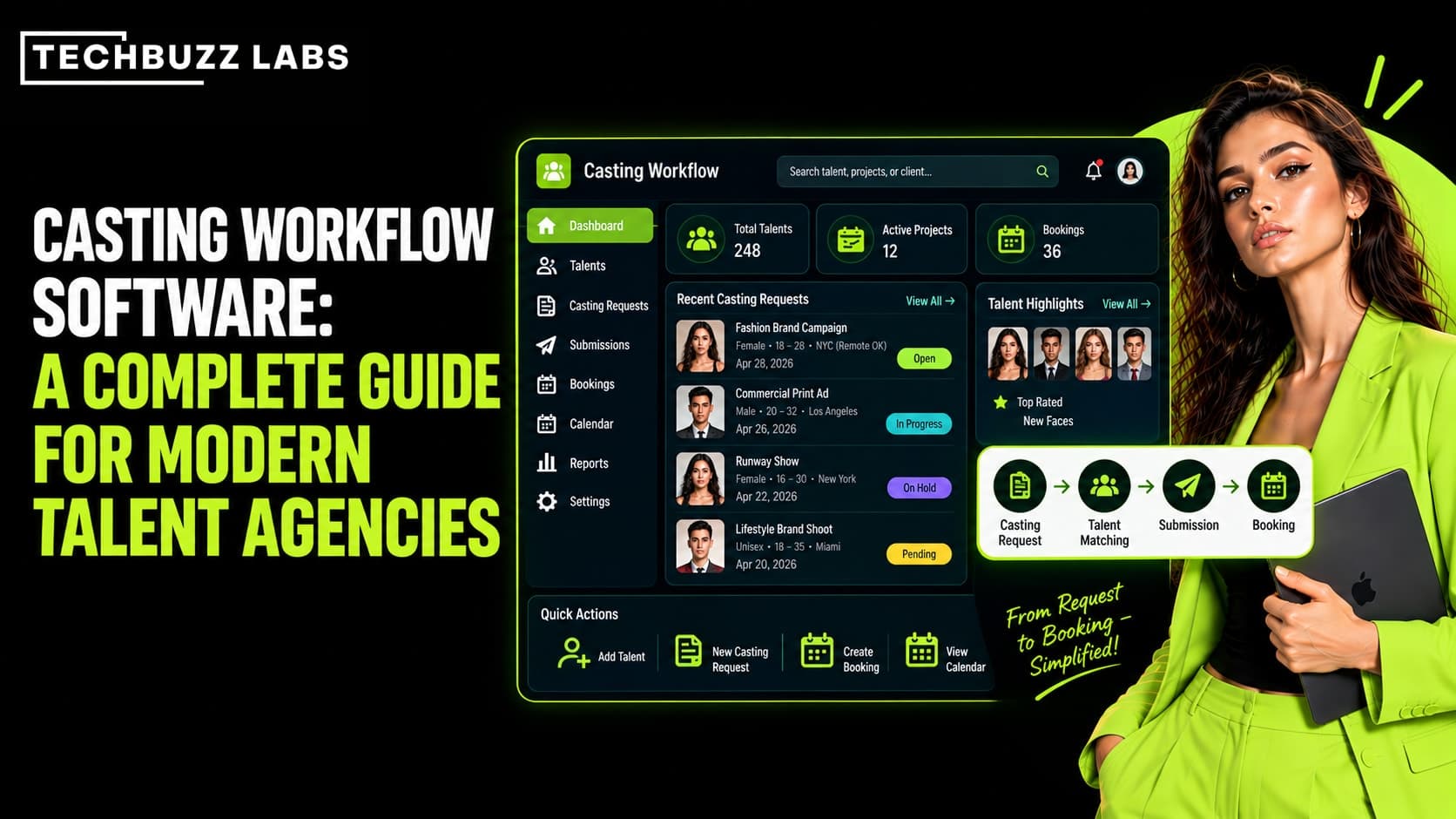
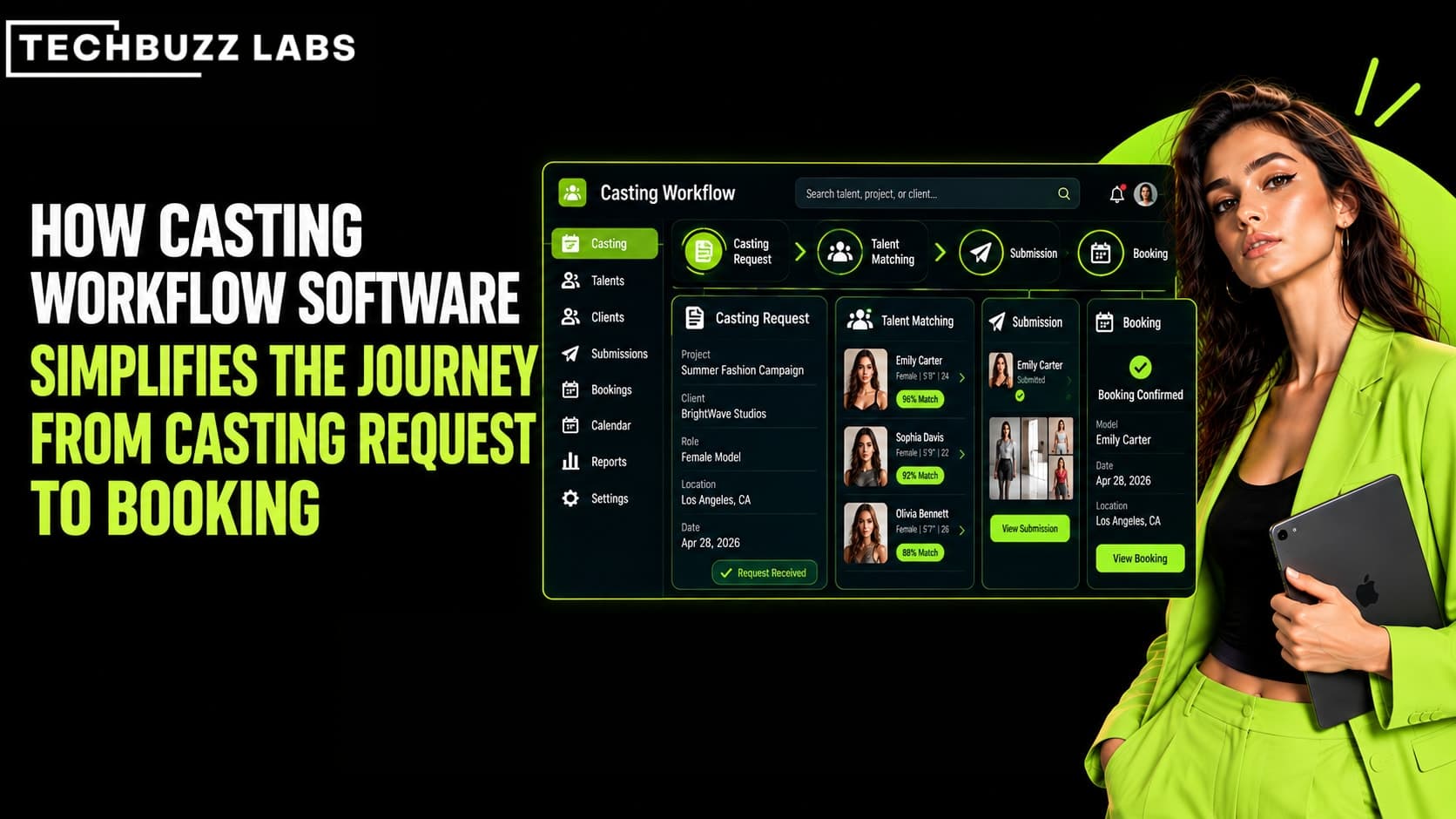
An agency can receive a client request, record the casting requirements, search the talent database, review AI-assisted matches, check availability, prepare submissions, track client feedback, and move selected talent toward booking.
Keeping these stages connected reduces the need to transfer information manually between separate systems.
Instead of using one tool for talent profiles, another for communication, and spreadsheets for casting status, agencies can create a more centralized workflow.
How TechBuzzLabs Can Support AI-Driven Talent Management
TechBuzzLabs focuses on custom technology solutions that can be designed around specific business workflows. For modeling and talent agencies, this approach can connect talent profiles, casting opportunities, client requests, availability, submissions, and booking processes within a centralized system.
With CRM Software for Modeling Agencies, an agency can create a foundation for integrating AI into its existing workflow rather than treating AI as a separate tool.
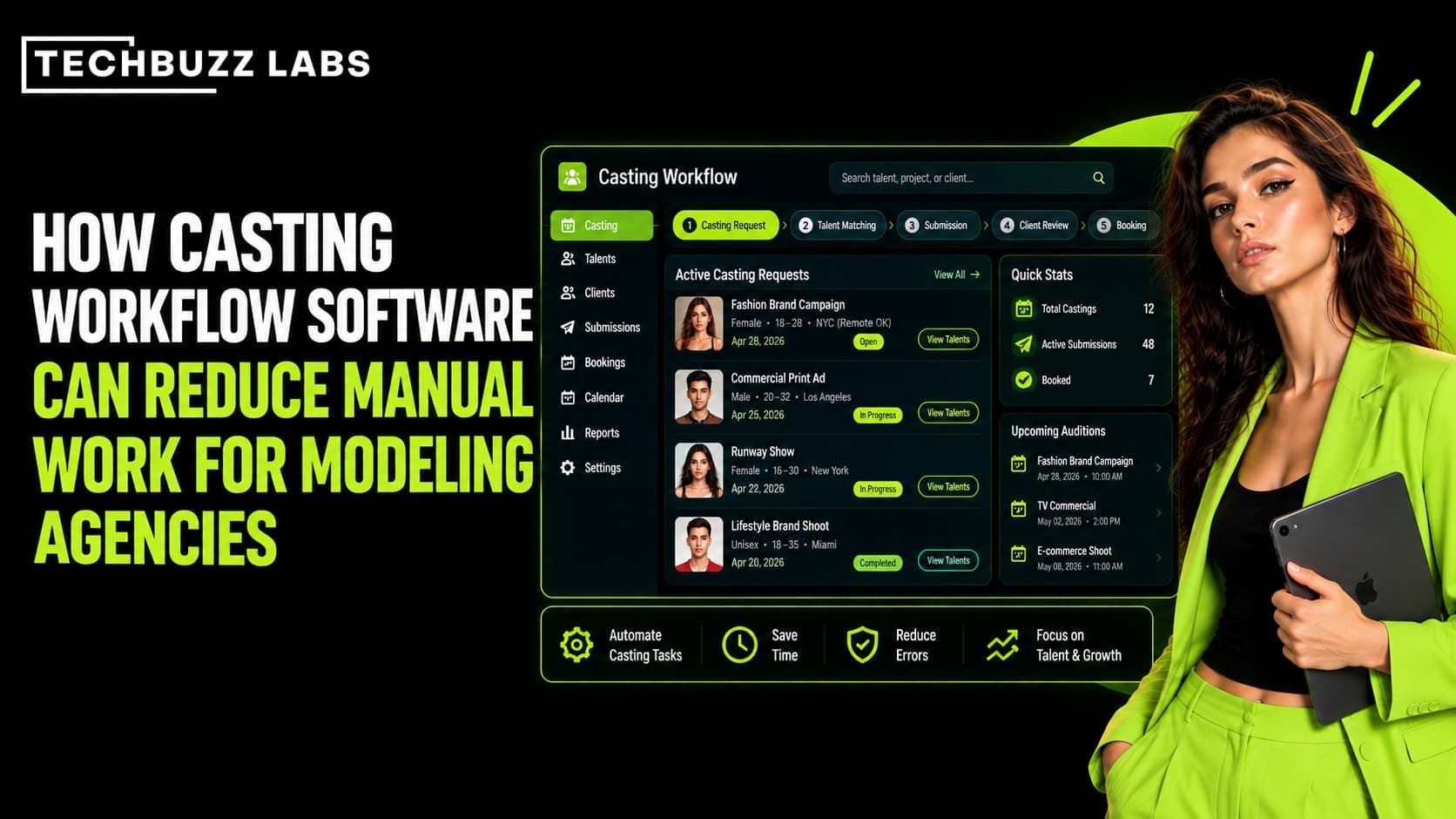
The right system can help agents spend less time searching through information and more time evaluating talent, communicating with clients, and managing relationships.
What Modeling Agencies Should Look for in an AI-Ready CRM
Agencies considering AI should first make sure their CRM has reliable and well-organized data. AI recommendations are only as useful as the information available to the system.
A strong CRM should make it easy to maintain accurate talent profiles, update availability, organize casting requirements, track submissions, record client feedback, and maintain booking history.
Agencies should also consider whether the system can support customizable fields, advanced search, workflow automation, reporting, and future AI capabilities.
The objective should not simply be to add an AI feature. The objective should be to create a connected system where AI solves practical problems within the agency's daily workflow.
Conclusion
AI can change how modeling agencies search for and match talent, particularly as agencies manage larger rosters and more casting opportunities. By analyzing structured information such as talent profiles, experience, availability, casting requirements, and client history, AI can help agents identify potentially relevant models faster.
However, successful talent matching still requires human expertise. AI should support agents rather than replace the professional judgment that goes into selecting and presenting talent.
For modern agencies in the USA, CRM Software for Modeling Agencies can provide the foundation for this approach by bringing talent management, casting, client information, availability, and booking workflows together.
With a connected CRM and carefully implemented AI capabilities, agencies can move from manually searching large talent databases toward a faster, more organized, and data-informed approach to talent matching.